


Postcard from London: Eva Ivić at King’s College London
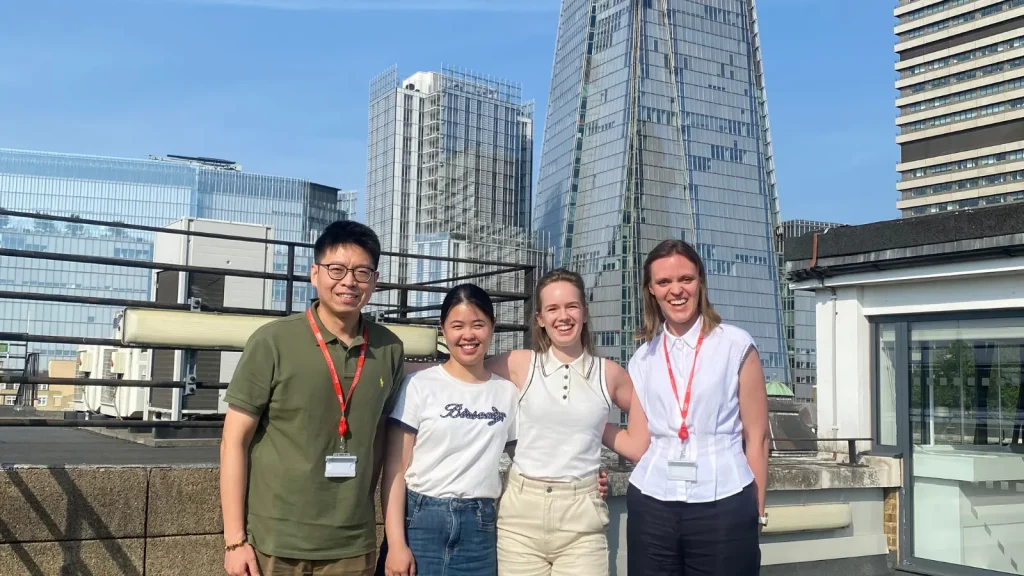
Postcard from London: Eva Ivić on AI and Medicine at King’s College London
It has been a true privilege to work with Professor Josip Car at the EMBRACE programme team at King’s College London over the past ten weeks. The EMBRACE programme provided an interdisciplinary research environment focused on advancing the responsible development and application of artificial intelligence in healthcare. During my fellowship, I have been developing a primary study evaluating the safety of large language model-generated medication counselling in response to questions concerning GLP-1 receptor agonists and other incretin-based medications.
I had the opportunity to attend the team’s Away Day, which included lectures and discussions led by prominent researchers in AI and medicine, as well as a Harvard lecture on the future of AI in healthcare. In addition, I had access to King’s Learning Hub, through which I completed several courses and obtained certificates, including Demystifying AI and Python for Health Research. I am taking away many valuable lessons, from the importance of critical thinking and constructive feedback to Professor Car’s inspiring example of leadership.
I also greatly appreciated the opportunity to connect with fellow Slovenians in London through events at the Embassy of Slovenia. Beyond this, it was a pleasure to explore London’s vibrant cultural and culinary scene, both of which I made the most of during my stay.
Additionally, working alongside renowned experts was highly motivating, and I greatly valued the opportunity to learn about their areas of expertise and professional development, ask questions, exchange ideas, and build meaningful professional and personal relationships. I look forward to continuing my collaboration with the Professor and the wider team in the future.
I actively participated in the team’s weekly meetings, which featured presentations and discussions on emerging methodologies and developments in artificial intelligence in medicine.
My work included developing the research protocol, preparing a set of clinical questions, designing different prompting approaches, and piloting potential evaluation frameworks. I also discussed the study design with members of the multidisciplinary team and received feedback from clinicians, and digital health researchers.
Through these activities, I strengthened my skills in research design, scientific writing, critical appraisal, prompt engineering, human and LLM evaluation of LLM-generated responses, interdisciplinary communication, and project management. The experience also deepened my interest in artificial intelligence and digital health and contributed directly to the development of my master’s thesis.
Following the fellowship, I will continue collaborating remotely with the EMBRACE team to finalise the protocol, generate the model responses, recruit evaluators, coordinate the evaluation process, analyse the findings, and prepare the study for publication. Overall, the visit provided valuable research experience, strengthened my understanding of AI evaluation in medicine, and enabled me to establish lasting professional relationships with an interdisciplinary research team.
I will always be grateful to the entire ASEF team for making this experience possible.