


Interdisciplinary Innovations – A Bridge to a Sustainable Society of the Future I
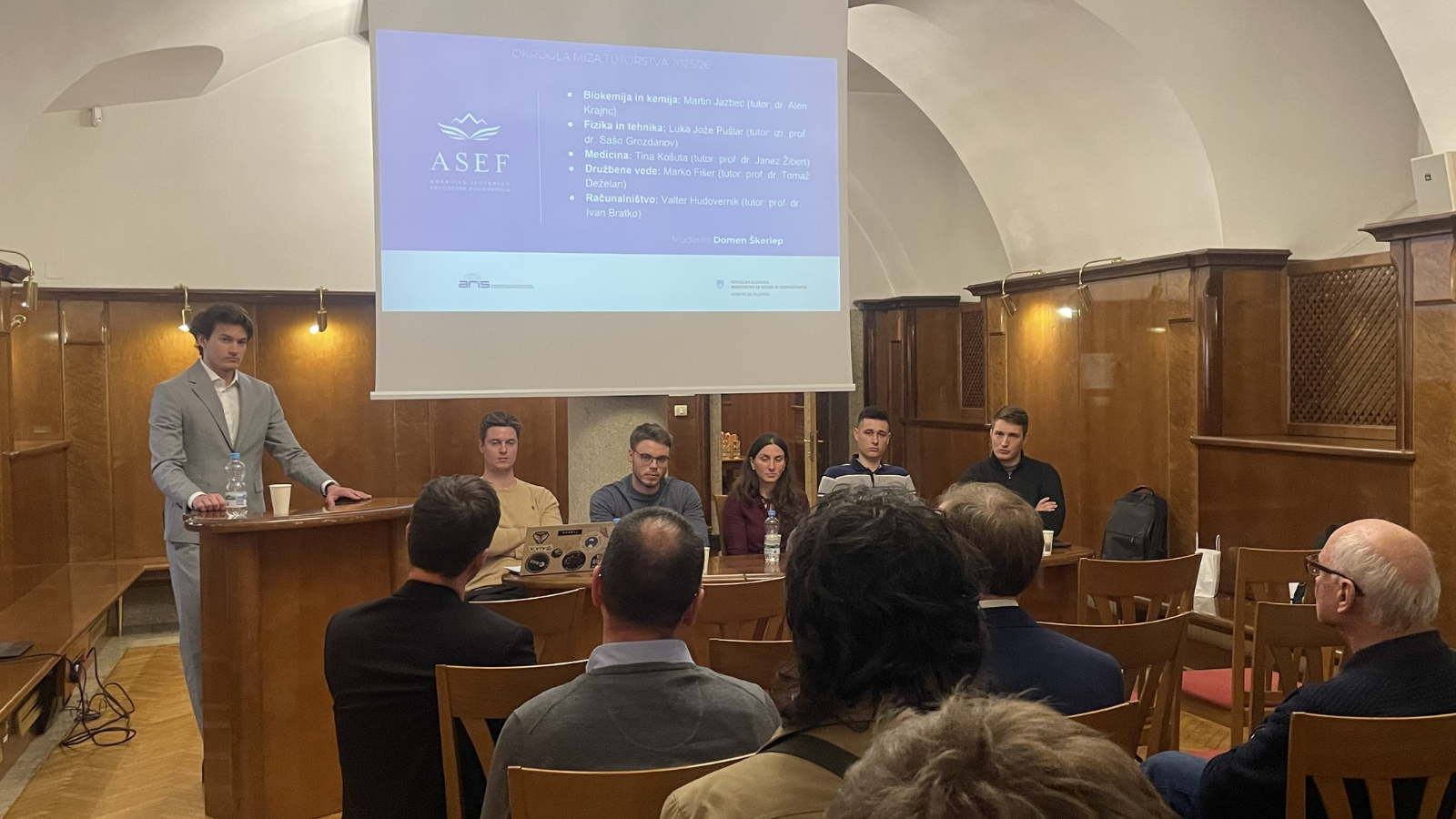
On Wednesday, 18 March 2026, the first roundtable of the ASEF Tutor Program 2025/26 titled Interdisciplinary Innovations – A Bridge to a Sustainable Society of the Future I took place at the Prešeren Hall SAZU. ASEF fellows explored various aspects of the ninth Sustainable Development Goal, which emphasizes building resilient infrastructure, promoting sustainable industrialization, and fostering innovation. The event was moderated by Domen Škerlep, an ASEF Fellow of the 2024 generation.
The event opened with welcoming remarks by Dr. Jože Rožanec, Head of the ASEF Tutor Program, who highlighted the importance of interdisciplinary collaboration and connecting different generations in addressing contemporary societal challenges. He emphasized that the ninth Sustainable Development Goal encourages building foundations that enable the efficient functioning of society and the transfer of innovations into practice. He also addressed the role of modern technologies, such as artificial intelligence, which can significantly contribute to development but require responsible and thoughtful use.
Participants were also addressed by Peter Alešnik from the Knowledge Transfer Office at the University of Ljubljana, who emphasized the importance of connecting knowledge, innovation, and the entrepreneurial environment in creating sustainable solutions. He pointed out that innovations arise every day, but the greatest challenge lies in their transition from ideas into practice, where they gain real value for society. He also highlighted the importance of a supportive environment for developing ideas and the role of the Sustainable Development Goals as a framework for addressing societal challenges in a comprehensive way.
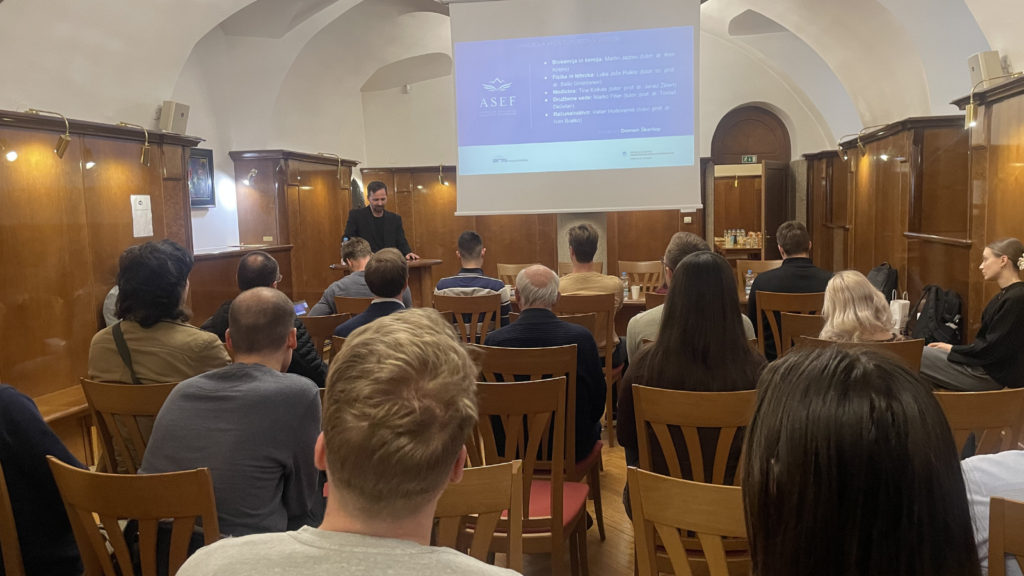
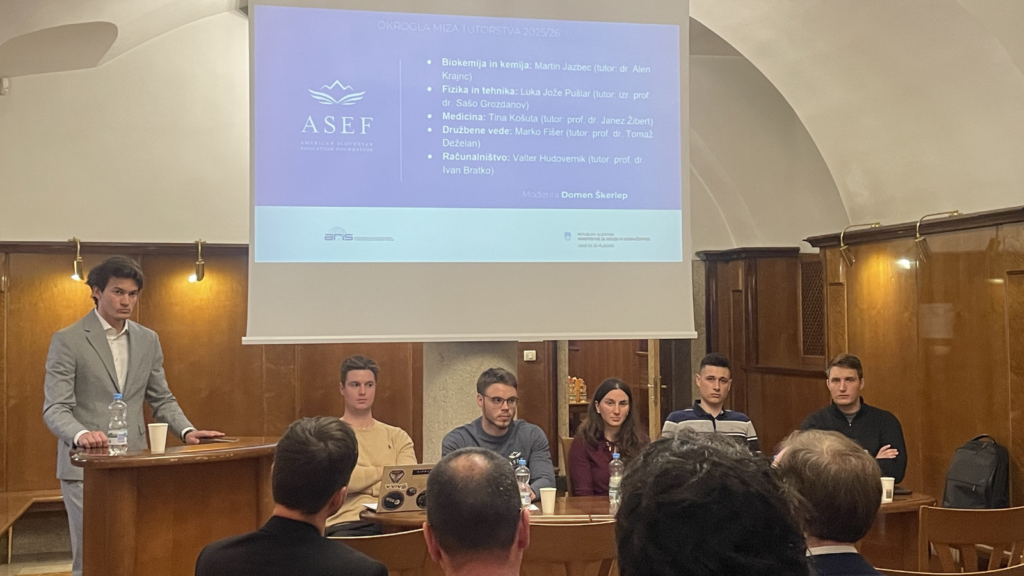
This was followed by presentations from ASEF Fellows of the 2025 generation, representatives of the tutor groups who participated in the roundtable discussion:
- Martin Jazbec, Biochemistry and Chemistry group (tutor: Dr. Alen Krajnc)
- Luka Jože Pušlar, Physics and Engineering group (tutor: Assoc. Prof. Dr. Sašo Grozdanov)
- Tina Košuta, Medicine group (tutor: Prof. Dr. Janez Žibert)
- Marko Fišer, Social Sciences group (tutor: Prof. Dr. Tomaž Deželan)
- Valter Hudovernik, Computer Science group (tutor: Prof. Dr. Ivan Bratko)
In the first part of the roundtable, the fellows presented key findings from their research, which addressed concrete challenges from industry and society. Some groups focused on challenges faced by the company Incom Leone and explored, from different perspectives, the optimization of ice cream storage and its by-products. They highlighted the impact of ice cream microstructure during storage, which affects texture and taste, and emphasized the importance of temperature control in preserving the product’s initial structure.
A special focus was also placed on the sustainable management of waste resources. The fellows presented the use of a so-called digital twin, which could utilize artificial intelligence to model wastewater treatment processes and optimize their reuse, for example in the production of biopolymers or biogas.
The discussion also addressed the field of health and society. The fellows highlighted challenges related to personalized medicine, where appropriate data infrastructure for the secure storage and processing of genomic data is essential. They emphasized the need for clear regulation and a balance between the use of data for medical advancement and the protection of individual privacy.
Another important aspect of the discussion focused on urban environments, where fellows analyzed the phenomenon of urban heat islands and the accessibility of green spaces. They found that green areas significantly contribute to improving air quality, biodiversity, and the well-being of residents; however, their accessibility is not evenly distributed. In planning the cities of the future, they therefore emphasized the importance of including different social groups and using data analysis and models to ensure more equitable and sustainable spatial planning.
In conclusion, participants highlighted the importance of interdisciplinary collaboration in transferring knowledge into practice. They agreed that in Slovenia, the biggest challenge is not a lack of ideas or knowledge, but rather their implementation in real-world environments. They emphasized the need for stronger connections between academia, industry, and society, as well as the creation of an environment that encourages innovation, courage, and collaboration.
The next ASEF Tutor Program roundtable (2025/26) will take place on 9 June 2026.
The event was organized with the support of the Office of the Republic of Slovenia for Youth and the Government Office for Slovenians Abroad.