



ASEF Story with Peter Slatnar: Speed of Development is the Best Patent
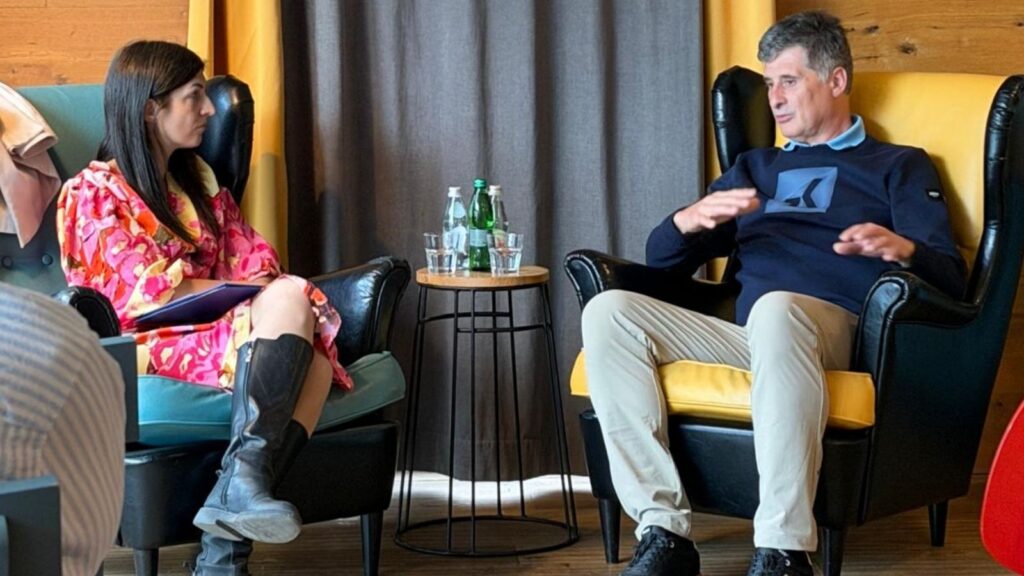
As part of the event series for ASEF fellows, an inspiring moderated conversation with innovator and entrepreneur Peter Slatnar took place on May 20 at Bistro FTP in Ljubljana. The story of the Slatnar brand, which today shapes the very top of the Ski Jumping World Cup, did not happen overnight. It is the result of a rich family craftsmanship tradition under Krvavec, Slatnar’s own competitive experience, and extraordinary engineering courage.
From Garage Innovation to Saving the Slovenian National Team
Peter Slatnar started his journey in his home workshop as a curious kid. The improvements to ski bindings, which he initially developed through a trial-and-error method for his own needs, grew into a top-tier company for precision CNC machining. The turning point for the company came in 2016, when Elan suddenly halted its production of ski jumping skis. With exceptional agility, Slatnar took over the entire production of the equipment in just a few weeks, literally saving the Slovenian national team from a competitive and organizational collapse. Today, world-class athletes such as Nika Prevc, Domen Prevc, and Anže Lanišek win on his skis and bindings.
Development is Faster Than Bureaucracy: Why Slatnar Doesn’t Bet on Patents
Special emphasis during the talk was placed on the protection of intellectual property. In the world of elite sports, where competitors are constantly watching your every move, many wonder how to legally protect their inventions. Peter Slatnar highlighted his company’s core strategy: instead of lengthy and expensive patenting procedures, Slatnar prefers to invest directly into development. The reason lies in the dynamics of the industry, which evolves at lightning speed.

Finding “Gray Areas” and Translating Feelings into CNC Language
The attendees were also interested in crisis management and balancing on the edge of the strict rules set by the International Ski Federation (FIS). As a small and agile manufacturer, Slatnar dares to push closer to the edge of the regulations (the so-called “gray areas”) than clumsy foreign systems, thereby pushing the boundaries of the technological revolution.
One of the major challenges in production is communicating with the athletes. Elite ski jumpers often express their wishes using abstract descriptions (e.g., wanting a ski to be “more responsive” or “calmer”). The Slatnar team must successfully translate these subjective feelings into concrete technical specifications and micron-level adjustments on CNC machines. A key advantage here is vertical integration – having development and production under one roof, which allows for extremely rapid realization of ideas.
Engineering Courage Without Borders: For Us, Impossible Technical Challenges Do Not Exist
One of the key takeaways from the conversation was that no challenge is too big for Peter Slatnar and his team. The company does not stop at ski jumping; with immense engineering courage, they constantly push the limits of what is possible. They successfully transfer their rich knowledge of aerodynamics and materials to other sectors, taking on highly demanding custom inventions – ranging from the production of premium spearguns and rowing equipment to specialized medical devices and industrial components.
To ensure the company can continue to successfully push these boundaries, Slatnar places a heavy emphasis on his team. He pointed out that they look for individuals who bring a unique combination of skills to the table: personal experience in ski jumping combined with a strong engineering or innovative drive. It is precisely this interplay of practical understanding of what happens on the ski jumping hill and technical expertise that holds the key to their greatest successes.
Our sincere thanks go to Mr. Peter Slatnar for taking the time to have this inspiring conversation, sharing his invaluable experience, and motivating ASEF fellows with his drive toward their own engineering and entrepreneurial courage.