



ASEF Fellow Lana Nastja Anžur Joins High-Level Panel at Trilateral Commission Conference
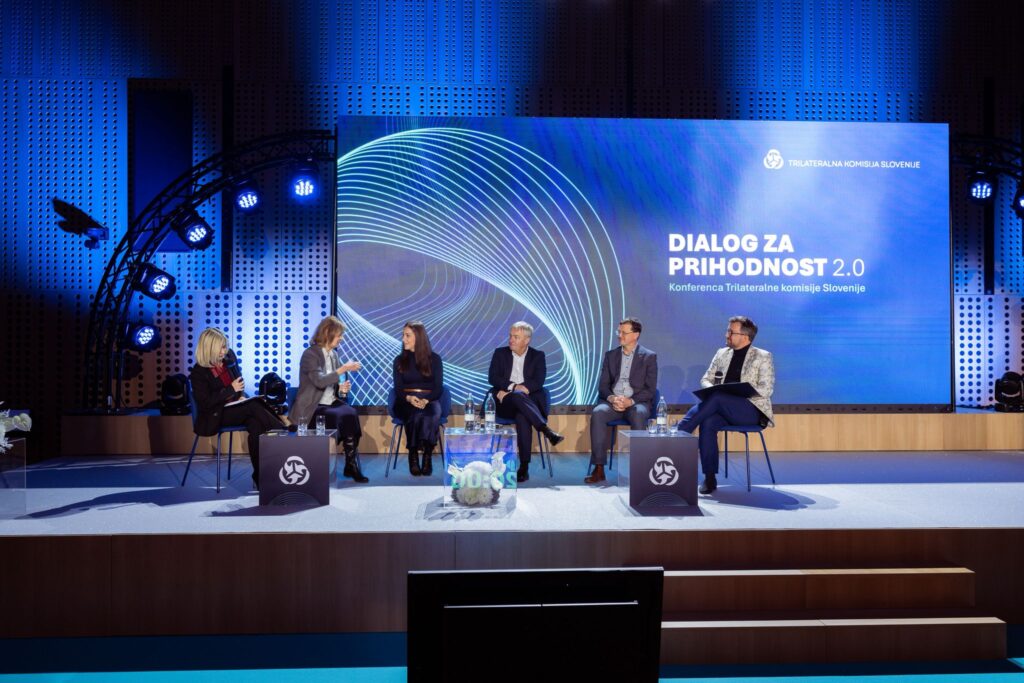
Brdo pri Kranju, November 28 – Lana Nastja Anžur, an ASEF Fellow of the 2024 generation, participated as a panel guest at the annual conference of the Slovenian Trilateral Commission, held at Brdo pri Kranju under the title “Dialogue for the Future 2.0.” The event was attended by more than 250 invited guests and over 50 speakers from various fields – business, science, politics, diplomacy, culture, media, and sports. The conference was dedicated to fostering dialogue as a tool for social progress and reflecting on the future of Slovenia, based on competitiveness, social justice, mutual respect, and cultural self-confidence.
The Trilateral Commission is an international non-governmental organization founded in 1973 with the vision of strengthening cooperation between North America, Western Europe, and Japan. It was established by David Rockefeller, Henry Kissinger, and Zbigniew Brzezinski, with the aim of seeking answers to key global questions through inclusive dialogue. Today, it brings together 410 members (180 from Europe) and connects leading representatives from business, politics, media, civil society, and academia. It is based on the values of democracy, human rights, the rule of law, and free economic initiative. Meetings are held under the Chatham House Rule, and the commission also develops research projects and issues publications for the strategic consideration of global challenges.
Lana Nastja Anžur participated as a speaker on Panel 1: Intergenerational View, alongside Jure Knez, Helena Koder, and Prof. Dr. Roman Globokar, moderated by Dr. Žiga Vavpotič and Valentina Smej Novak. She co-created a discussion on the intertwining perspectives of different generations and the importance of intergenerational cooperation for the country’s long-term development vision. She emphasized that values represent a bridge between generations, even though their expression and realization change over time. Younger generations bring freshness, future orientation, and the courage for change into the dialogue, while older generations contribute experience, continuity, and a broader chronological perspective. The synergy of both is the foundation for the sustainable development of a society that preserves its roots but remains open to innovation.

Her participation confirmed the important role of young representatives of the research community in the space where strategic reflections on the future of society are shaped, and directed attention to opportunities for their more active involvement in further cross-sectoral dialogue and cooperation within the framework of national and international development initiatives.