


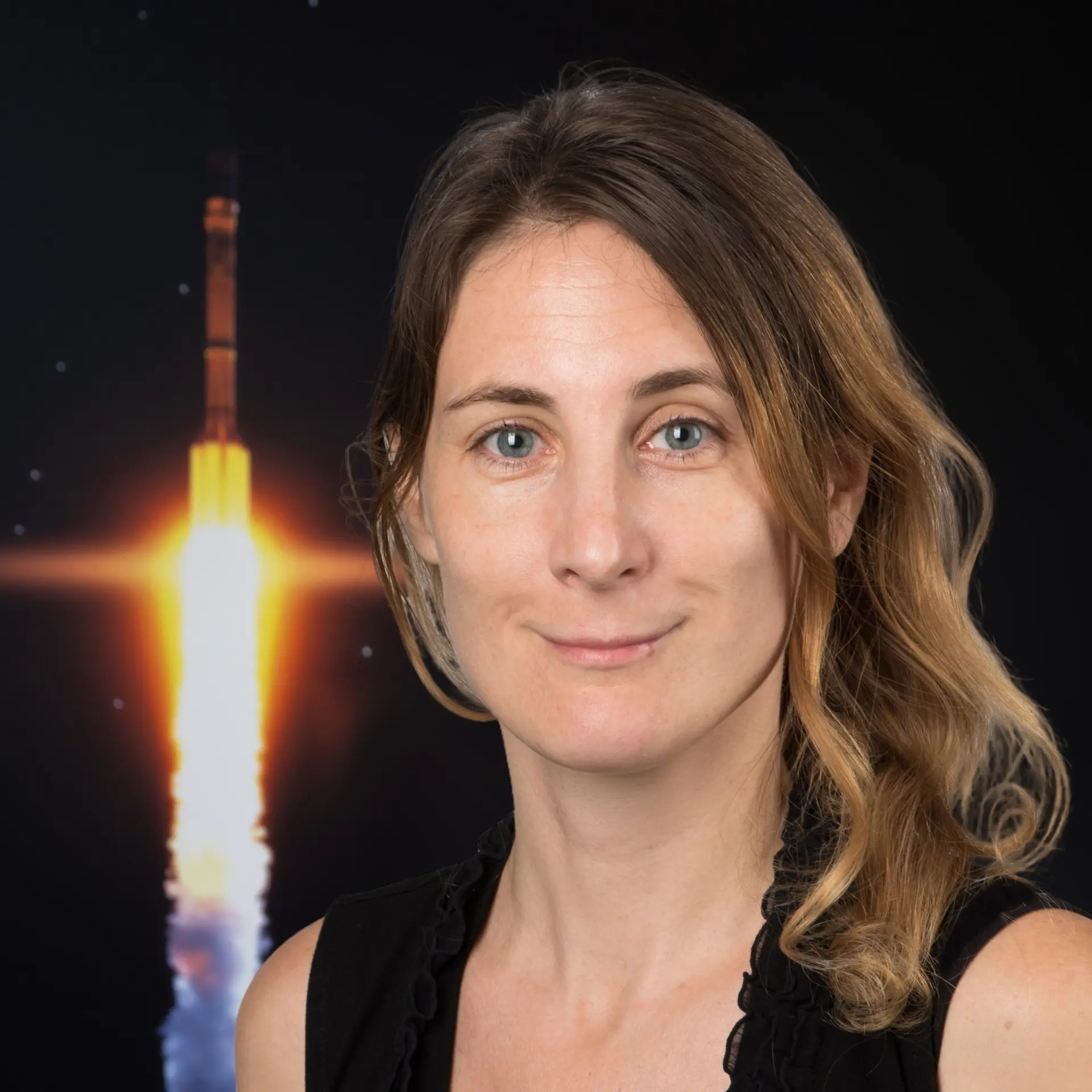
Mojca Frank Bertoncelj
Bio:
Mojca Frank Bertoncelj is Head of Research and Privatdozentin at the Institute of Aerospace Medicine, University of Zurich. She earned her medical degree and PhD in Biomedicine at the University of Ljubljana, and later headed the Integrative Tissue Biology group at University Hospital Zurich. In 2021, after winning a BioMed X innovation bootcamp in partnership with Johnson & Johnson, she founded a research group on Tissue Protection in Autoimmune Diseases at the BioMed X Institute in Heidelberg.
Dr. Frank Bertoncelj’s research showed that the body’s structural cells, such as fibroblasts, help translate genetic risk into arthritis and explain why the disease strikes some joints while sparing others. These findings shed light on the site-specific nature of autoimmune disease and earned international recognition, including the Walter Siegenthaler Silver Award.
Today, her research follows two directions. First, she combines single-cell technologies with gene editing and drug testing to pinpoint the cells and molecules that resolve inflammation and fibrosis, with the aim of achieving long-term remission. Second, she investigates tissue biology and the immune system in the field of space medicine and gravitational biology. Within the Zurich institute’s research program spanning parabolic flights, suborbital rockets, and low-Earth-orbit platforms, she is building a new direction of her research: gravitational immunology.
Research projects:
Helping inflamed tissue heal, not scar
About one in ten people live with an autoimmune disease, many without effective therapy, and inflammation often leads to fibrosis and organ damage. We ask what switches inflammation off and lets tissue heal, not scar. We map skin and joint tissue from healthy donors and patients in remission or with treatment-refractory disease at single-cell and spatial resolution. We rebuild tissue biology in 3D tissue models and use CRISPR and drug screens to find and validate new drug targets. Our goal: healed tissue in hard-to-treat disease.
Gravitational immunology and space medicine
Gravity has shaped life on Earth throughout evolution. Altered gravity changes mechanical forces and fluid dynamics, and spaceflight accelerates organ dysfunction that may take decades to develop on Earth. This makes altered gravity both a model of health dysfunction and a tool for bioengineering approaches not achievable on Earth. Using human cells and 3D tissue models, we study how altered gravity shapes immunity and tissue biology and how to harness it, aiming to deliver health solutions on Earth and in space.
From 2028, students are welcome to join our projects and gain experience with any of the
methods described.